Say Kansas or Missouri before we size the job
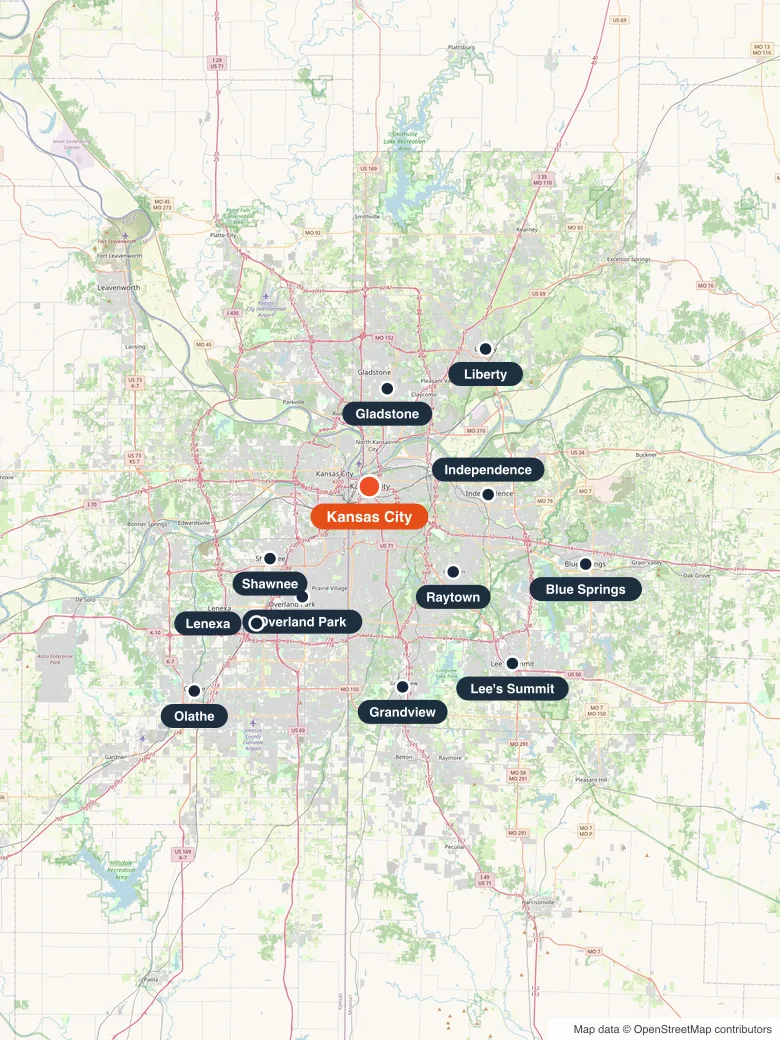
The listed coverage reaches Kansas City, Independence, Lee's Summit, Blue Springs, Liberty, Gladstone, Raytown, and Grandview in Missouri. It also includes Overland Park, Olathe, Shawnee, and Lenexa in Kansas. A metro-area name is not enough to identify the authority responsible for a street or sidewalk.
Give the complete address and the proposed position. We use the location to separate delivery coverage from public-space permission. The size recommendation follows the debris and volume. The placement question follows the property line and local government.
Kansas City Public Works lists a dumpster permit
Kansas City, Missouri Public Works handles activities within the public right-of-way or work that affects public use of streets and right-of-way. Its permit page lists a Dumpster Permit and directs applications through Compass KC. If any part of the box would occupy city public space, settle that application before the delivery date. The fee paths and neighboring-city rules are laid out on our dumpster permit page.
Do not apply the Kansas City, Missouri process to a neighboring city or to an address across the state line. Contact the local office that controls the street. Bring any approved location, traffic, marking, or date conditions back into the rental plan.
Make private placement work for the full rental
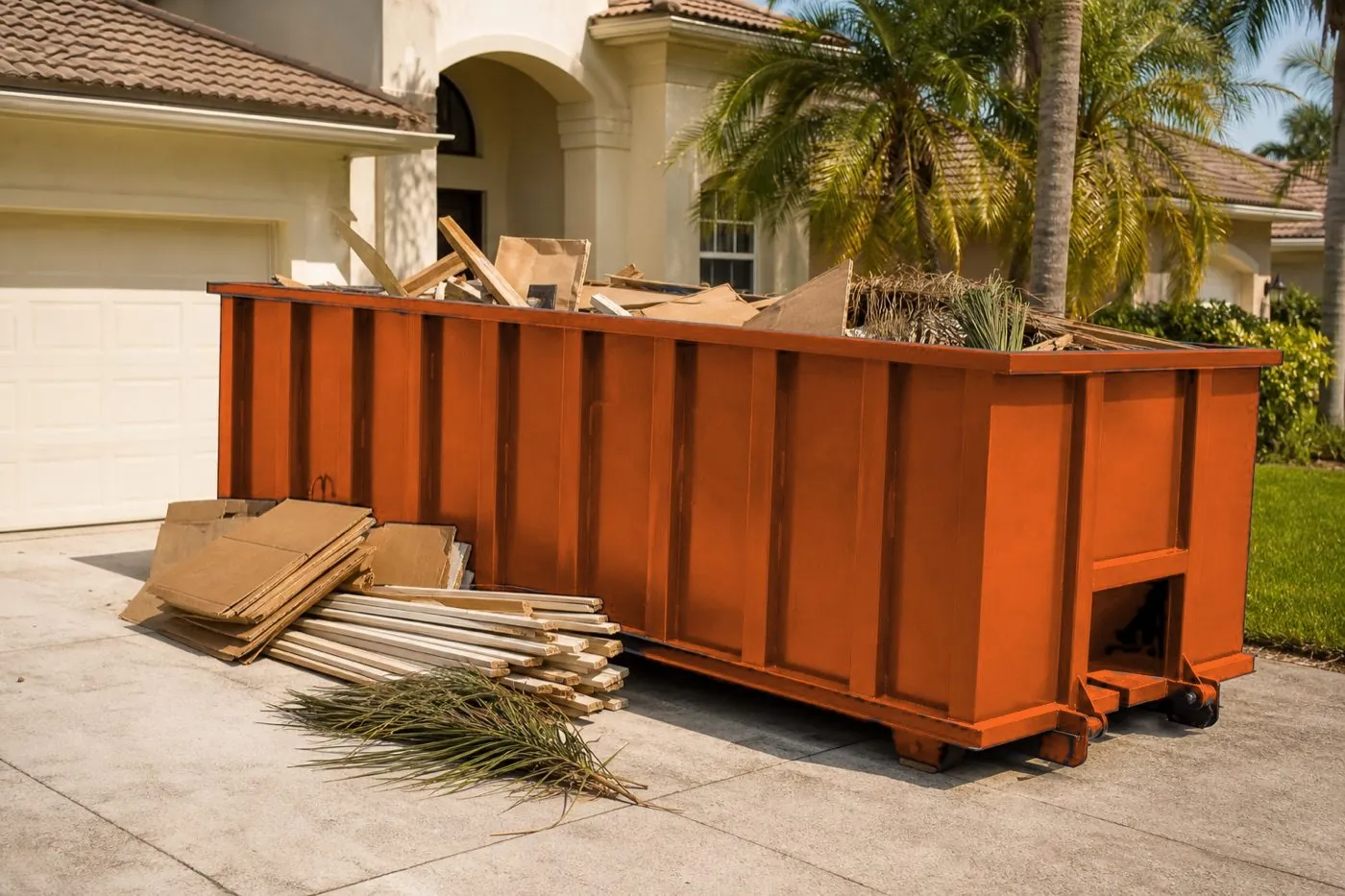
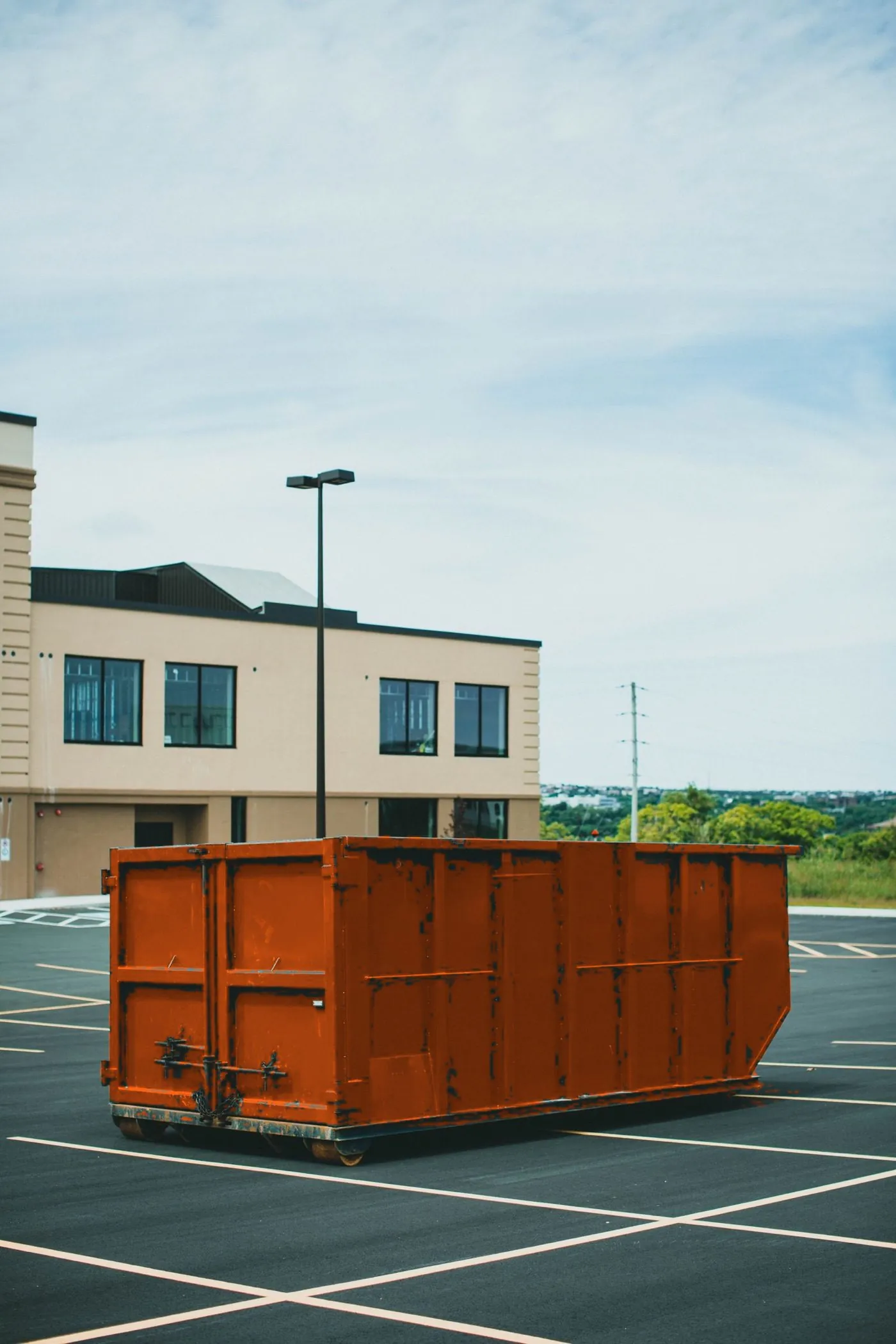
A private driveway or work pad can avoid the public-space issue when it is firm, accessible, and large enough. Walk the truck route. Check gates, alleys, parked vehicles, overhead utilities, tree limbs, soft shoulders, and turns. The route must still work at pickup after the site is busy and the box is loaded.
Keep access to garages, meters, hydrants, shared drives, and delivery doors. Point the container door toward the safe loading path. Mark the position and keep that area open. A few minutes spent on the drop point prevents workers from carrying debris around a poorly placed box for days.
Match the debris before matching the yards
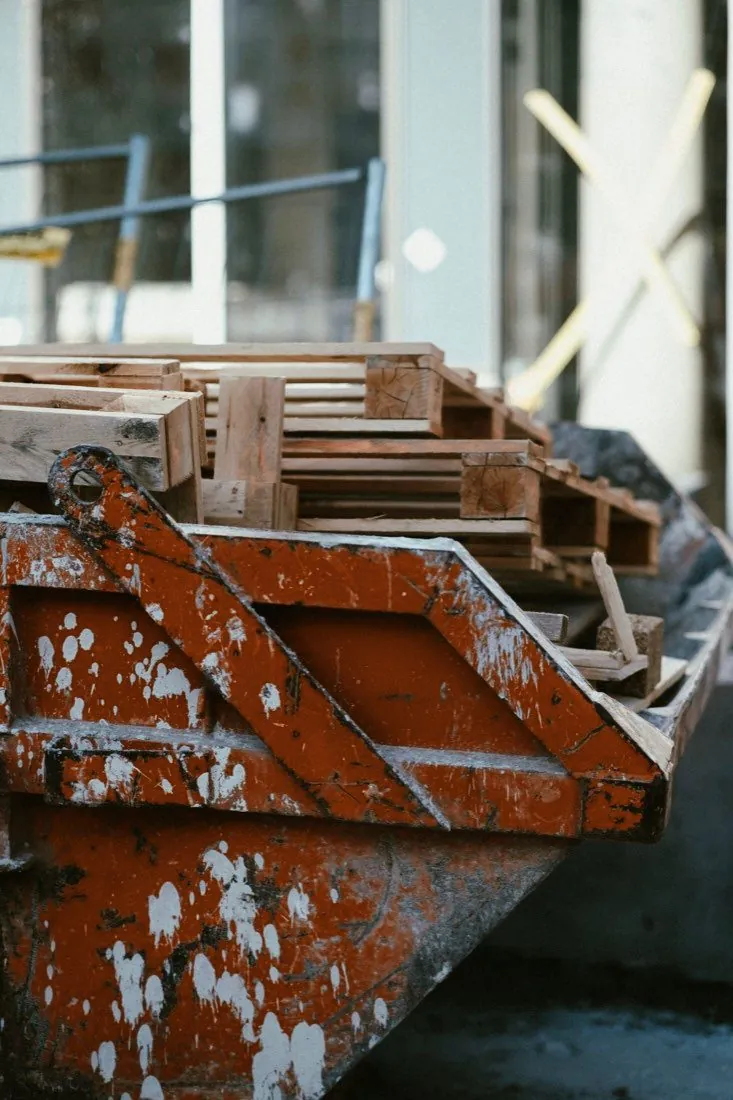
Start with the main waste stream. Household contents, remodeling debris, shingles, yard material, concrete, and soil have different volume and weight behavior. Dense loads need a clear limit even when the container has empty space above them. Keep incompatible or uncertain material separate. The state-by-state rules are on our accepted materials page.
Pull liquids, batteries, tires, appliances, automotive products, sealed drums, and chemical-labeled containers out of the loading pile. Ask about them before anyone begins filling the box. Load evenly and below the top rail so the container can be collected safely.
Rent only when the container saves work
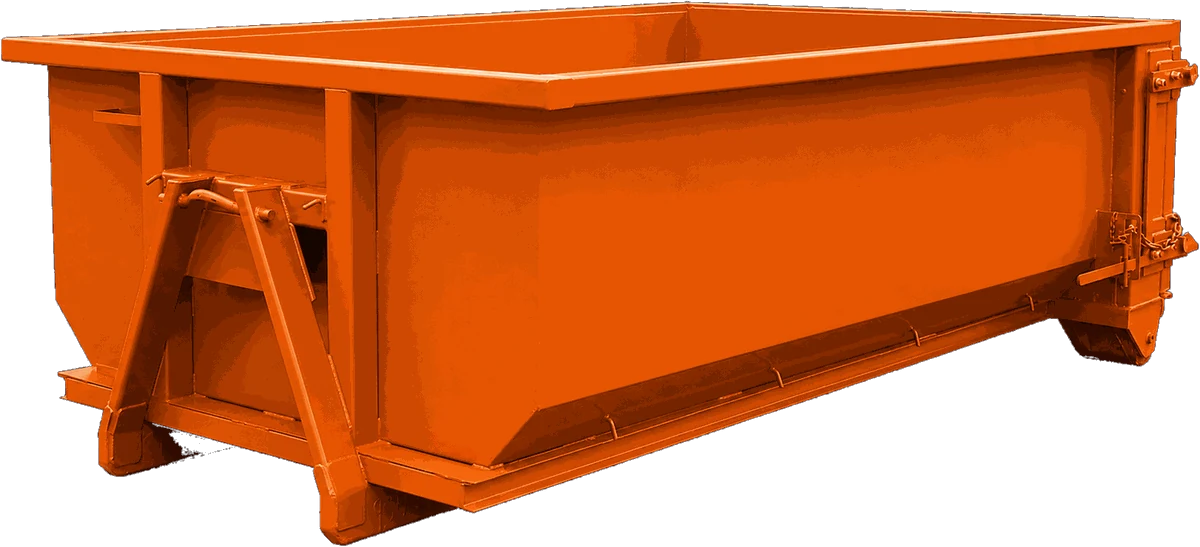
A roll-off serves projects that create debris across several work periods. It gives renovation crews and cleanout teams one loading point and one scheduled final haul. A small sorted load that already fits a safe self-haul may not need a rental. A one-visit junk-removal service may be better when the customer cannot load the material.
Call (816) 357-8932 with the address, state, debris type, estimated volume, access limits, private or public placement, and work dates. We will put the container size, weight terms, rental window, and placement assumptions in the quote without treating “Kansas City” as one universal rulebook.
Write the city and state on the job notes even when the street name seems familiar. The metro repeats road names and crosses county and state boundaries. That small detail keeps a Kansas City, Missouri public-works question from being sent to a Kansas jurisdiction, and it keeps delivery coverage from being mistaken for permit authority.
We keep the Compass KC record with the placement notes when Kansas City, Missouri public right-of-way is involved. The service address, proposed footprint, dates, and truck approach should describe one consistent plan. An approved public position does not answer the material question, and an accepted debris type does not approve the street position. Both decisions must remain clear before anyone begins loading.